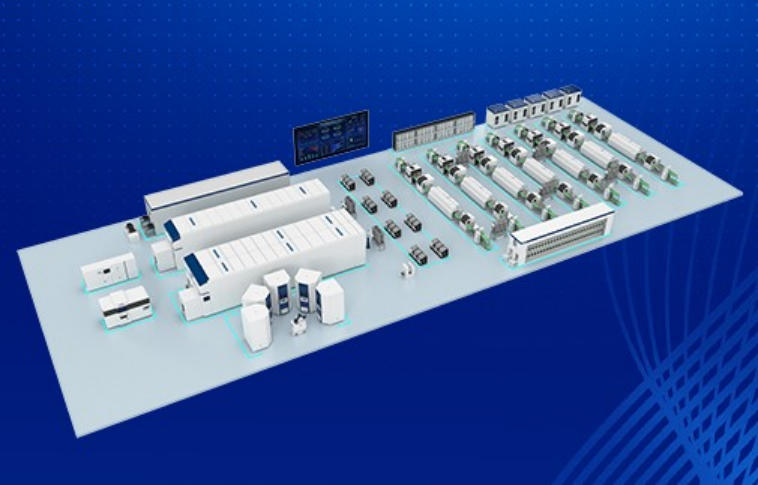
Walking into today's smart factories, AGVs and AMRs have become the protagonists of internal logistics automation. They weave through production lines, transporting materials and docking with equipment. But a common question arises: What's the real difference between AGVs and AMRs—and which one should you choose for your workshop?
This guide breaks down the key distinctions in navigation, flexibility, and intelligence to help you decide which mobile robot fits your operations best.
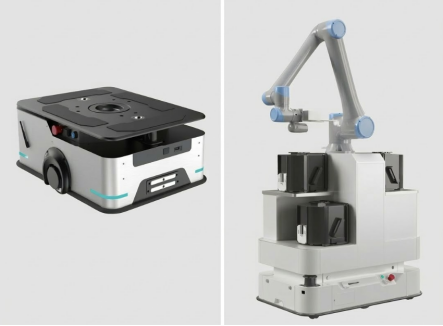
AMR vs. AGV
1. What is AGV?
An AGV (Automated Guided Vehicle) is a mobile robot that navigates based on external infrastructure.
Its core operational logic is "path following." AGVs strictly rely on fixed routes marked by magnetic strips, floor-embedded tapes, or laser reflectors. Lacking the capacity to perceive or adapt to environmental changes, they cannot deviate from their path. If an obstacle blocks its way, the vehicle will stop and wait until the obstruction is removed.
Therefore, AGVs are optimal for repetitive handling tasks where the movement path is fixed and the environment remains highly stable.
2. What is AMR?
An AMR (Autonomous Mobile Robot) is an intelligent robot that makes real-time navigation decisions using its onboard sensors and software.
Its core operational logic is "goal-driven." AMRs do not follow fixed physical routes. Before the operation, they map the environment using SLAM (Simultaneous Localization and Mapping) technology. While in motion, they perceive their surroundings with sensors like LiDAR and cameras to autonomously and dynamically plan a safe, efficient path from point A to point B.
When facing dynamic obstacles—such as workers or forklifts—they can safely navigate around them in real-time and resume their mission. This makes AMRs perfectly suited for flexible production scenarios with complex, changing environments and a high need for human-robot collaboration.
3. Key Differences
Feature | AGV | AMR |
Navigation | Follows fixed routes such as magnetic tape or wires | Navigates freely using onboard sensors and real-time mapping |
Flexibility | Limited; route changes require physical adjustments | Highly flexible; routes can be updated through software |
Obstacle Handling | Stops when encountering obstacles | Actively reroutes around obstacles in real-time |
Setup | Requires infrastructure installation | Minimal infrastructure required |
Best Use Cases | Stable production lines with predictable routes | Dynamic environments with changing workflows |
Selection Guide of AMR vs. AGV
Choosing between AMR vs. AGV depends on several practical factors in your factory or warehouse.
Mission Type: What will the Robot Actually Do?
The first step is to clearly define the robot’s task.
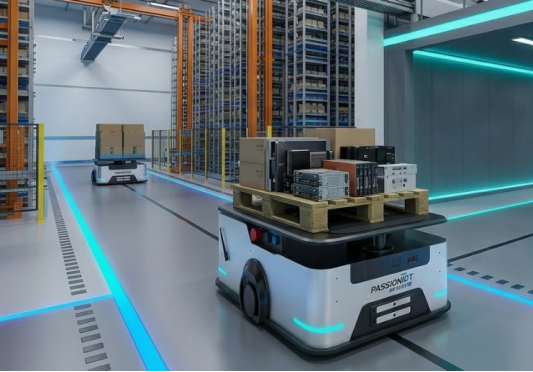
l Point-to-point Transport: If the job only requires moving materials from point A to point B without complex operations, AGV robots are often sufficient. They follow fixed routes and perform repetitive transport tasks efficiently.
l Equipment Docking: If the robot needs to align precisely with machines such as CNC equipment, assembly stations, or automated lines, AMR robots offer higher positioning accuracy and better flexibility.
l Pick-and-place or Assembly: If your process requires a robotic arm to handle items or perform assembly tasks, a composite robot solution (AMR combined with a robotic arm) is usually the best choice.
Material Characteristics: What Are You Moving?
The type of material being transported is a critical factor in the AMR vs. AGV decision.
l Payload: Determine whether the load is light duty (under 100 kg), medium duty (100–500 kg), or heavy duty (over 500 kg). Both AMR robots and AGV robots come in different load capacities.
l Material Form: Materials may come in pallets, totes, reels, or irregular shapes. The robot type should be compatible with how these items are stored and moved.
l Carrier Type: Some operations may require specialized carriers or custom tools to securely hold the materials during transport. The selected AMR or AGV robots should be compatible with these handling tools to ensure efficient movement.
Environment: What Does Your Shop Floor Look Like?
Your facility layout and conditions strongly influence whether AMR or AGV robots will work better.
l Floor Conditions: Smooth and well-structured floors are ideal for AGV robots, while AMR robots can better adapt to slightly uneven surfaces or changing layouts.
l Aisle Width: Narrow aisles and tight turning spaces may favor AMR robots, which can plan flexible routes and maneuver more easily.
l Dynamic Factors: In busy environments with human workers, forklifts or other vehicles, AMR robots are often preferred because they can detect obstacles and reroute automatically.
l Special Requirements: Some facilities may need robots designed for specific conditions, such as explosion-proof environments, cleanrooms, cold storage areas, or anti-static operations. In these cases, both AMR and AGV robots must meet the required safety and environmental standards.
Business Goals: What Outcome Are You After?
Finally, consider your long-term operational goals when comparing AMR vs. AGV.
l Efficiency Gains: Determine the throughput and cycle time you expect from the system. Automation should significantly improve material flow efficiency.
l Labor Savings: Many companies deploy AMR or AGV robots to reduce manual transport tasks and reassign workers to higher-value roles.
l Traceability: If your operation requires full material tracking, integrating AMR or AGV robots with systems like MES or WMS can provide real-time visibility of material movement. It will help improve production control and workflow management.
Scenario-Based Selection Guide
Different industries face different operational challenges, and choosing the right technology depends on how materials move, how flexible the workflow is, and how complex the environment becomes.
SMT Production Line Loading/Unloading
(1) Challenge
SMT production lines usually have narrow aisles, sensitive electronic components, and frequent line changeovers. Material delivery must be precise and fast to avoid production delays.
(2) Selected Solution
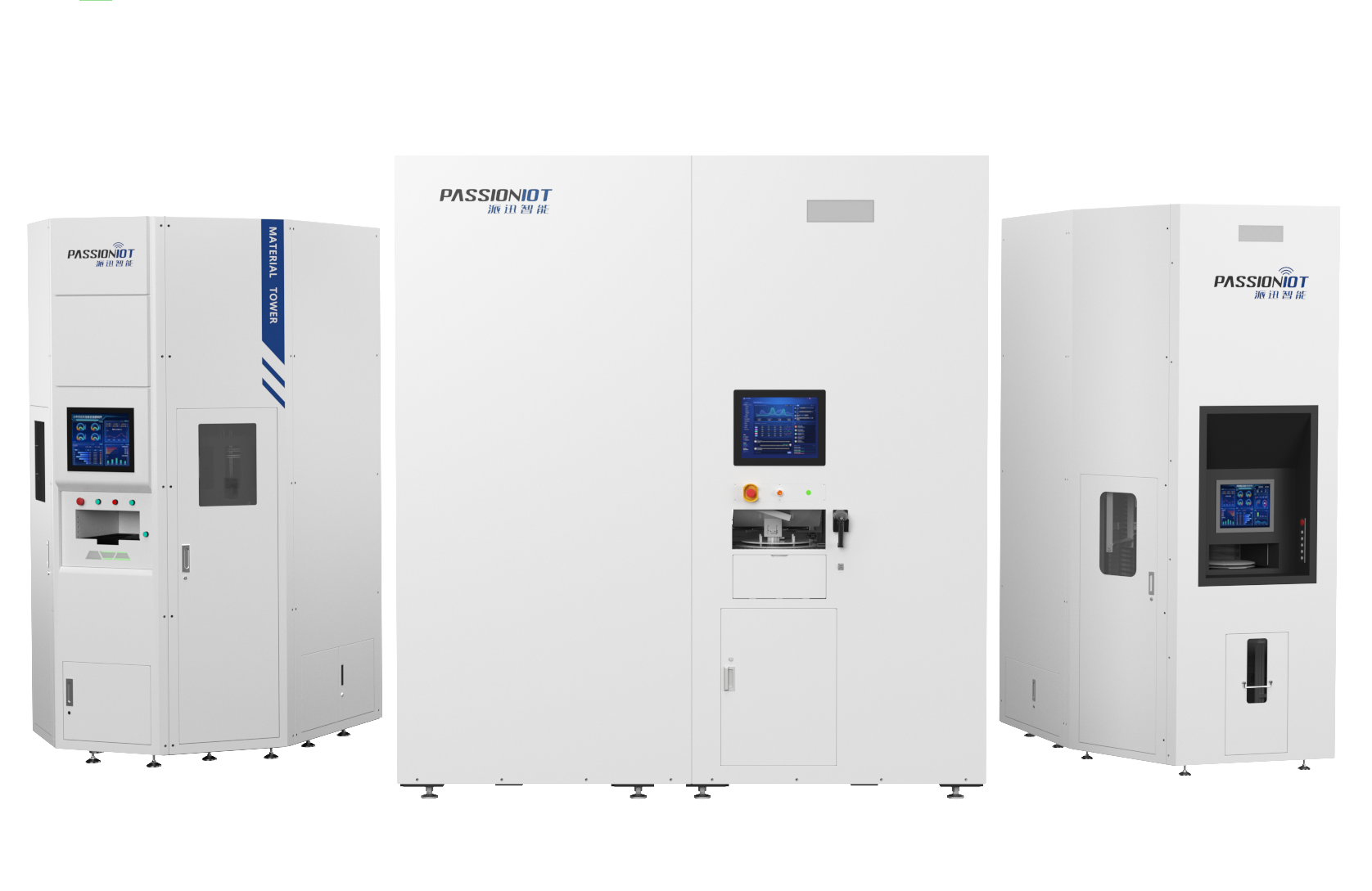
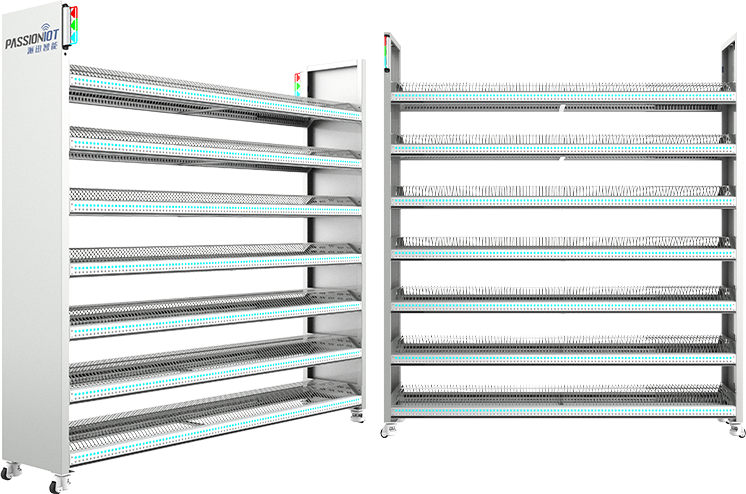
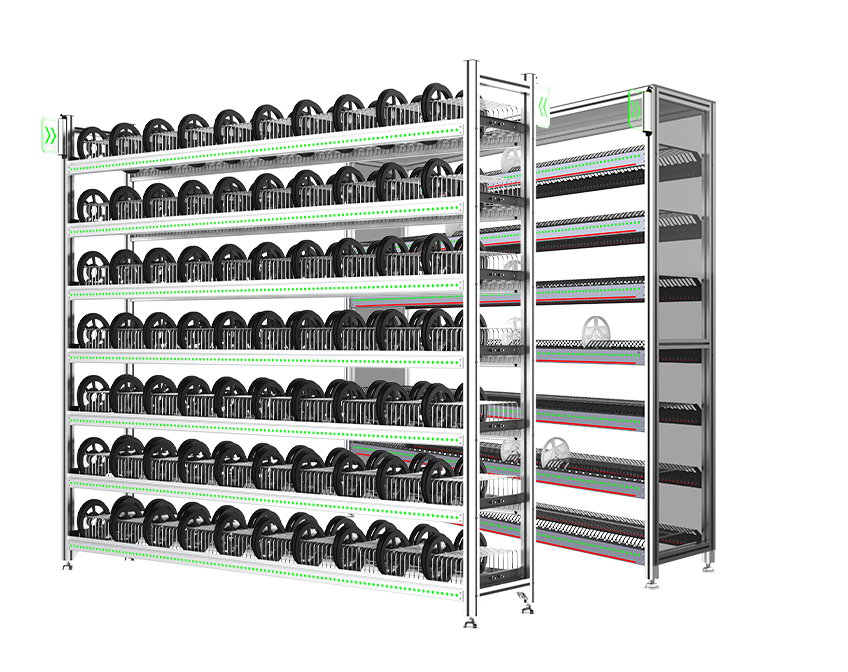
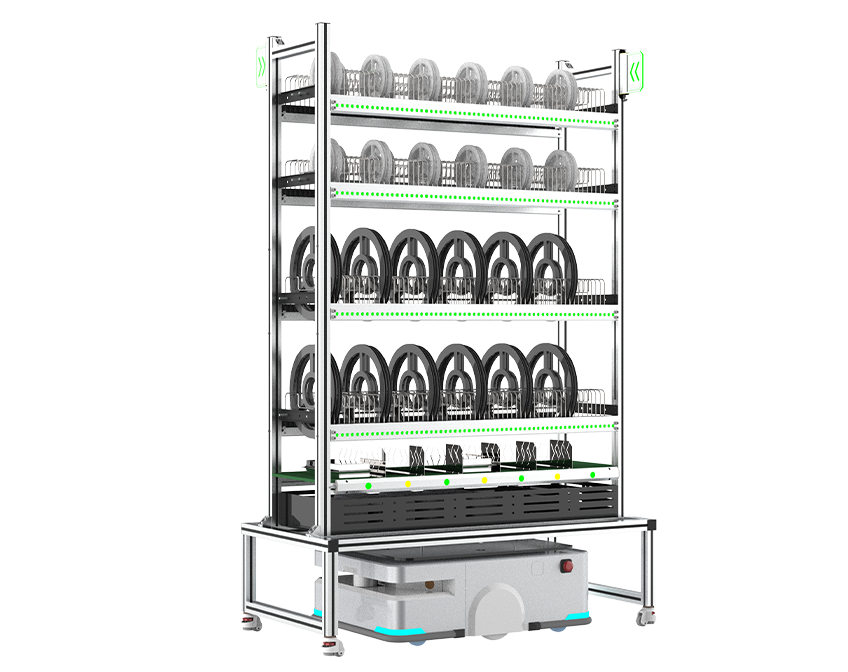
A PassionIOT SMT-specialized AMR is ideal for this scenario. The robot can automatically dock with systems such as the SMD Smart Tower or magazine rack, enabling “Material-to-Machine” automation and reducing manual handling.
Automotive Part Machining Workshop
(1) Challenge
Automotive machining environments are often characterized by oily floors, heavy metal parts, and the need for accurate CNC machine docking. These harsh conditions require strong load capacity and precise positioning.
(2) Selected Solution
The PassionIOT heavy-duty AMR, combined with a collaborative robotic arm, delivers the required performance in such demanding environments. It transports heavy castings across the workshop and handles precise loading and unloading at CNC machines.
Warehousing & Logistics Center
(1) Challenge
Warehouses face high throughput, thousands of SKUs, and frequent layout changes due to expansion or new product lines.
(2) Selected Solution
Both AGV and AMR robots can be effective, depending on operational needs. AGV robots are best for warehouses with fixed routes and stable layouts. Their structured navigation makes them cost-efficient for repetitive transport tasks.
AMR robots, on the other hand, are better suited for rapidly changing warehouses where routes need frequent updates. Their ability to create maps and reroute automatically allows greater flexibility.
Conclusion
There is no absolute "best" robot—the right choice depends entirely on your specific operational needs. Whether you prioritize flexibility in dynamic environments, precision material handling, or heavy-load transportation, the key is finding an automation partner that seamlessly integrates into your existing workflow.
PassionIOT offers a comprehensive portfolio of AMR and AGV solutions designed to meet diverse industry requirements, helping you achieve long-term productivity gains.





 Home
Home