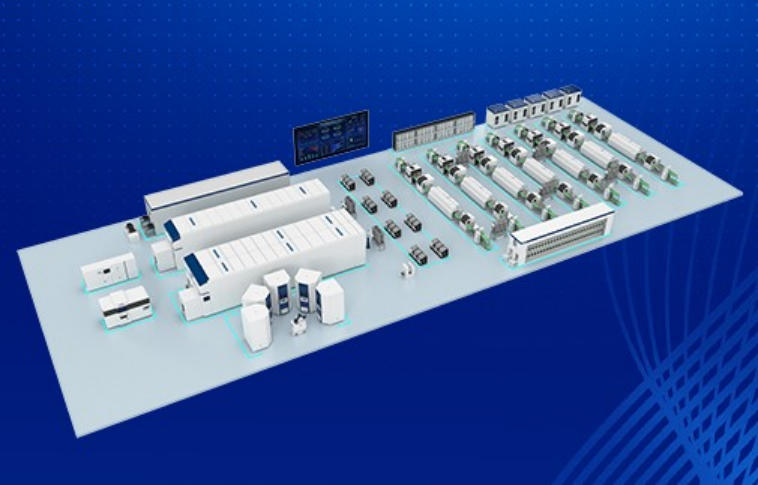
Many manufacturers manage finished and semi-finished goods in separate warehouses or systems, often leading to fragmented data and gaps in information flow.
Why is the old way failing?
Three main issues result: conflicting material management, disconnected data, and operational inefficiency. Smart storage solutions solve these with unified control and real-time data synchronization.
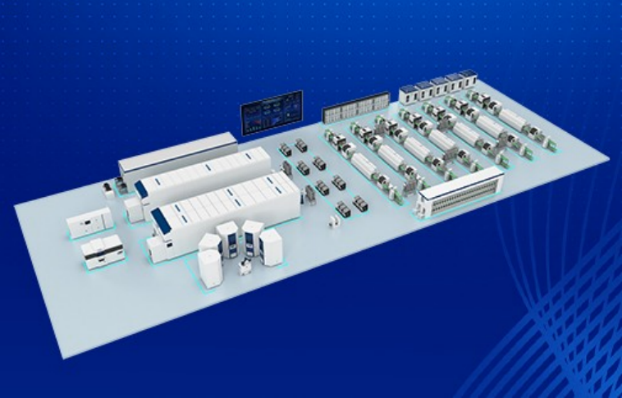
Challenges of Finished & Semi-Finished Goods
Here are some major challenges associated with finished and semi-finished goods management:
1. Conflict in Material Attributes and Management Objectives
Finished goods and semi-finished goods differ fundamentally in both characteristics and management goals. Finished goods have stable attributes, such as SKU and batch numbers, and operations within the finished goods warehouse focus on fast, accurate outbound shipping.
This is not the case with semi-finished goods. They may be in process, awaiting inspection, or qualified for the next step, with the primary objective of timely and precise supply to production lines.
→Traditional warehouse systems and workflows struggle to support both stable outbound logistics and dynamic in-process material flows simultaneously, creating structural conflicts.
2. Disconnect Between Information Flow and Physical Flow
Information about finished goods is stored in WMS or ERP systems, providing excellent visibility for inventory levels, order processing, and shipment tracking.
Semi-finished goods, on the other hand, are tracked in MES systems. Without real-time integration with WMS/ERP, the system may show materials as unavailable or misplace them entirely, leaving production planners to make decisions based on assumptions rather than facts.
→ Kit shortages, delayed schedules, and frequent coordination challenges between production and warehouse teams.
3. Efficiency Paradox of Operational Processes and Space Utilization
Operational efficiency is further challenged by overlapping workflows. Outbound picking for finished goods often occurs in the same space and time window as material requisition for production, creating interference between personnel, equipment, and transport paths.
Fixed space allocation worsens the problem. When dedicated areas are permanently assigned to finished products or semi-finished goods storage, storage capacity cannot respond to changes in production rhythm or order volume.
→An inefficient paradox where some areas experience congestion and overstocking, while others remain underutilized, reducing overall warehouse performance.
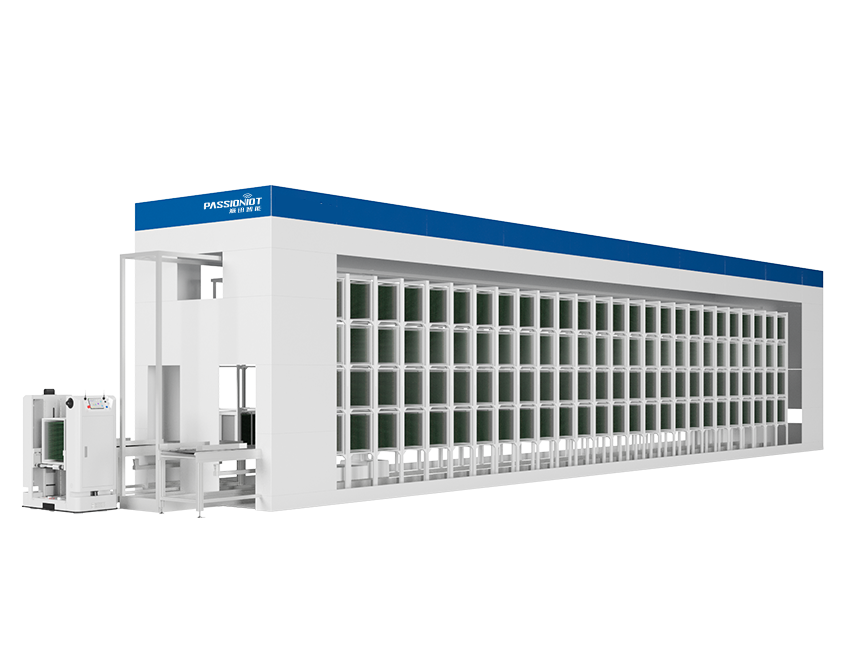
PassionIOT Miniload System for Finished & Semi-Finished Goods
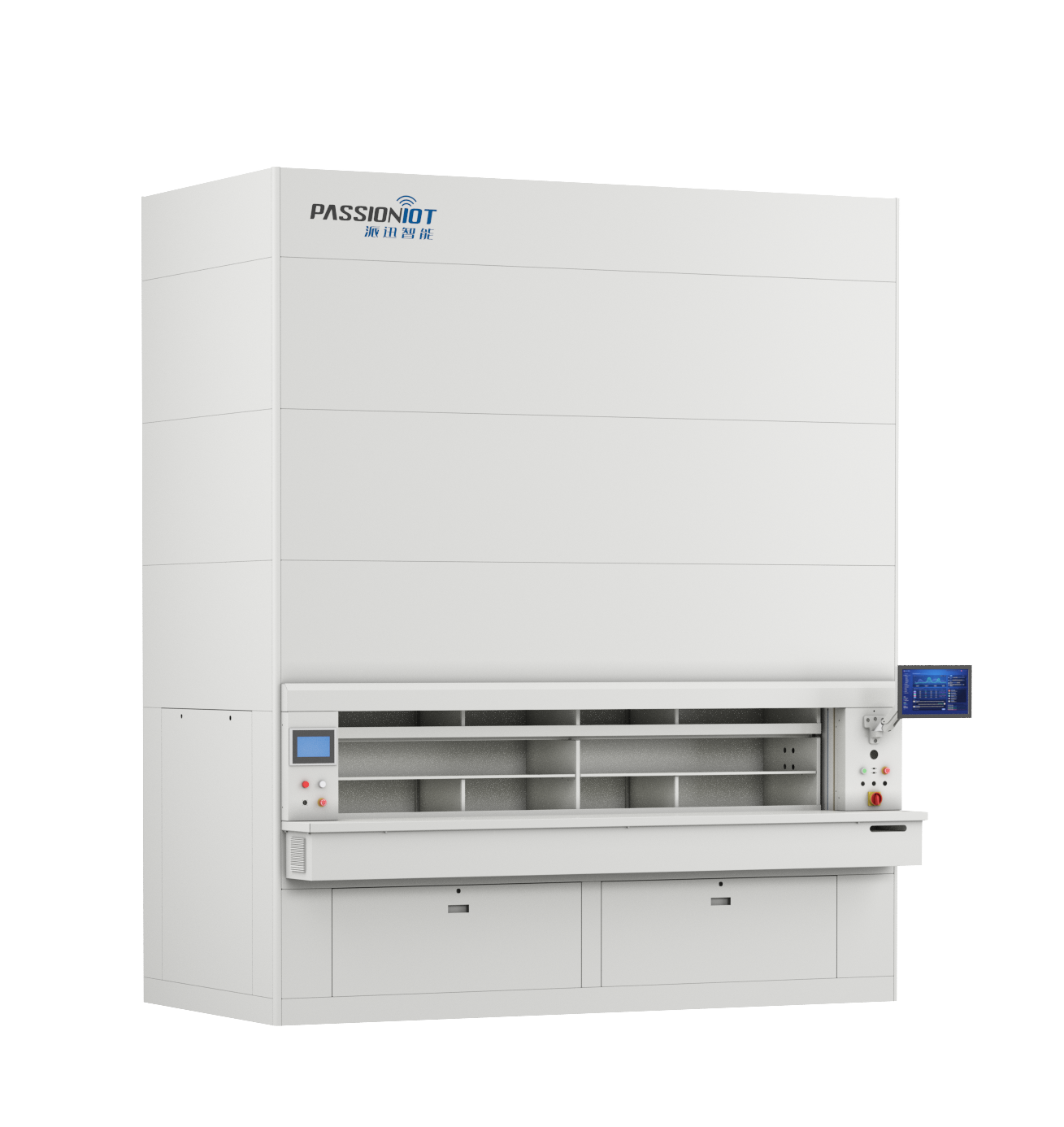
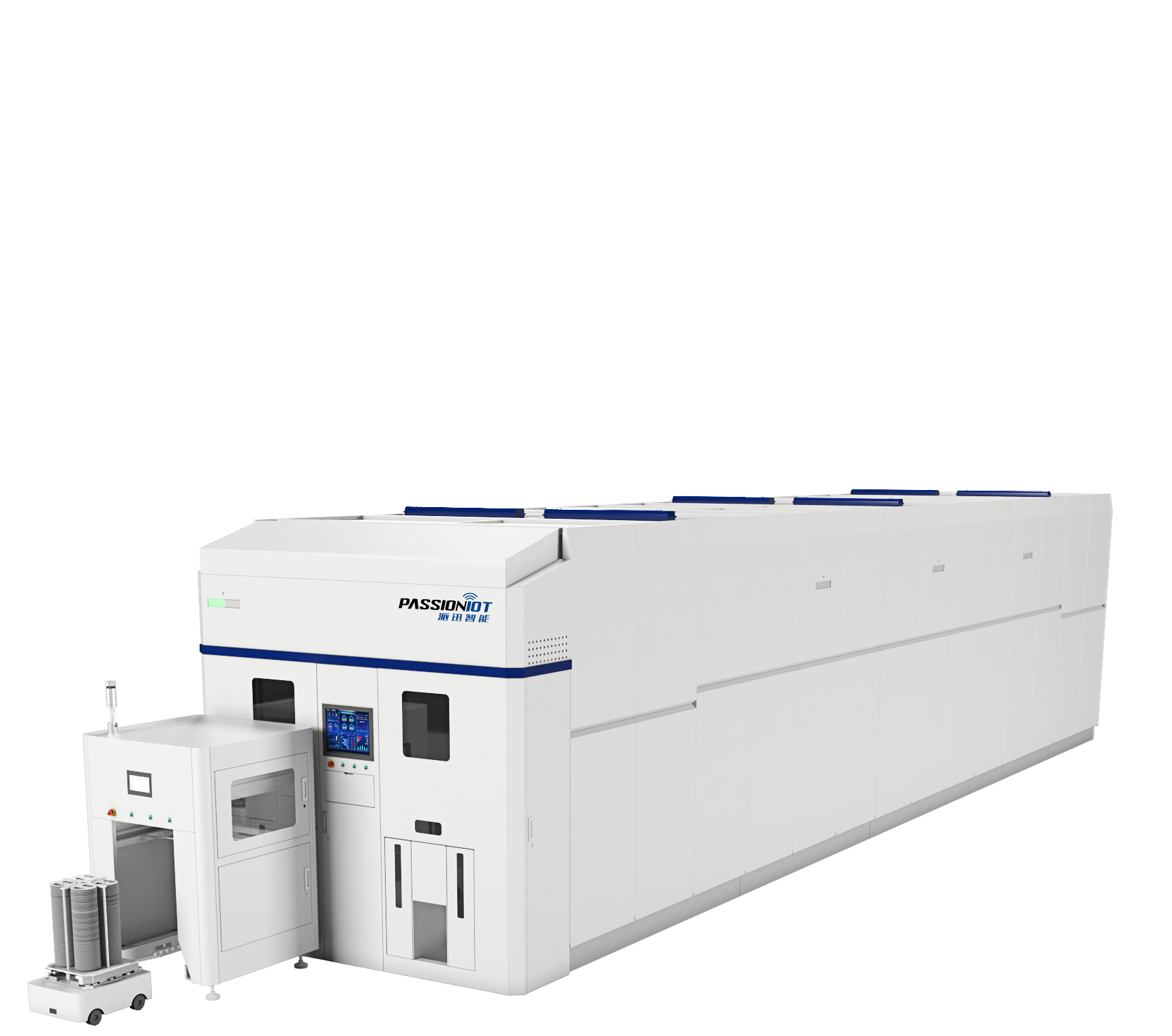
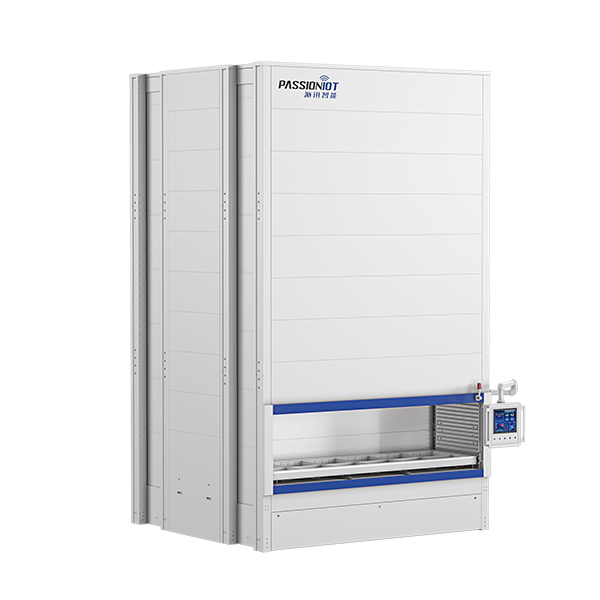
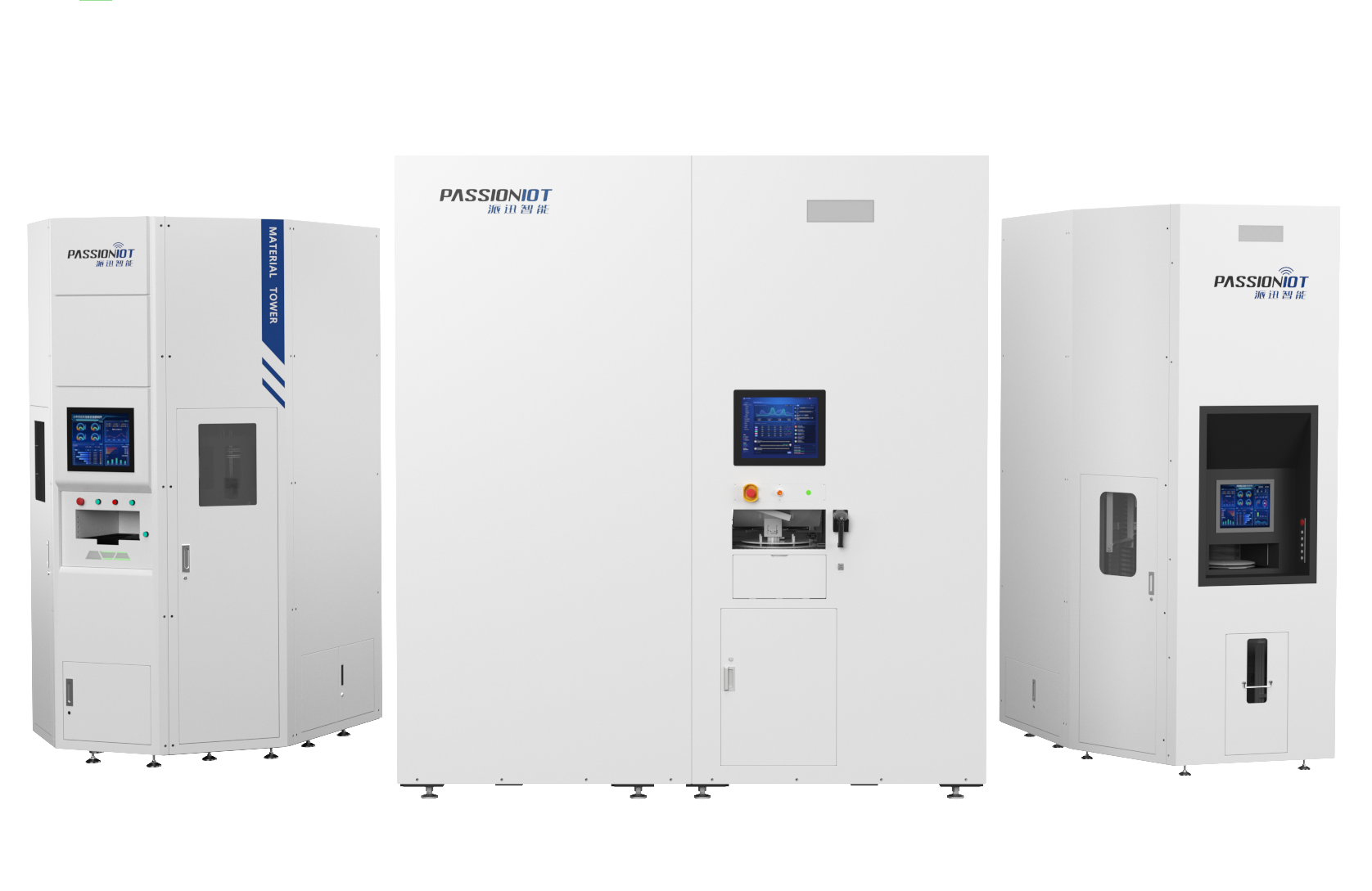
Facing these persistent headaches, enterprises need a smarter way to unify storage and streamline operations. That's where PassionIOT's Miniload System comes in.
1. Hardware Infrastructure
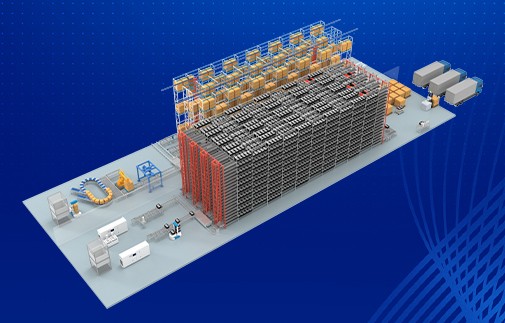
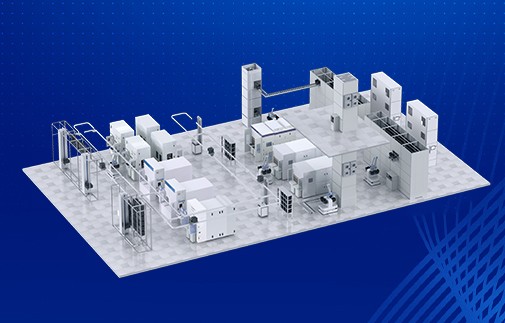
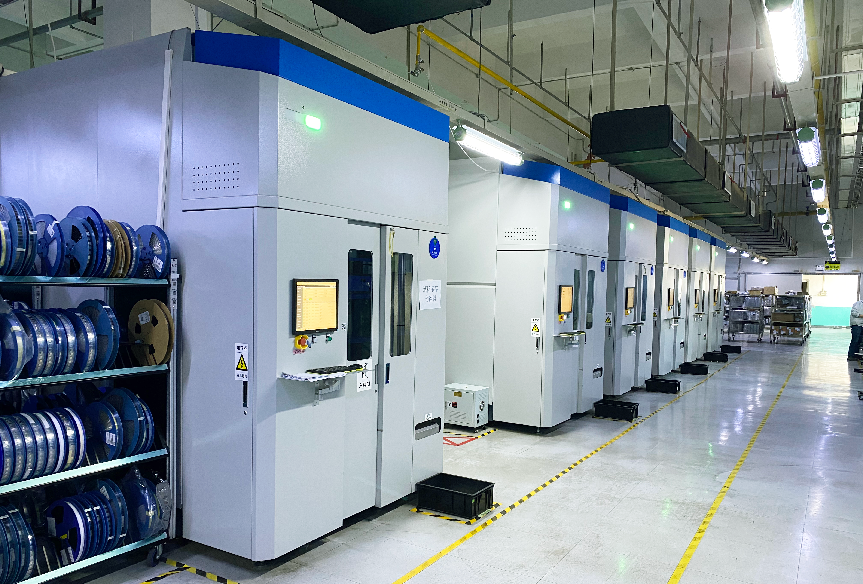
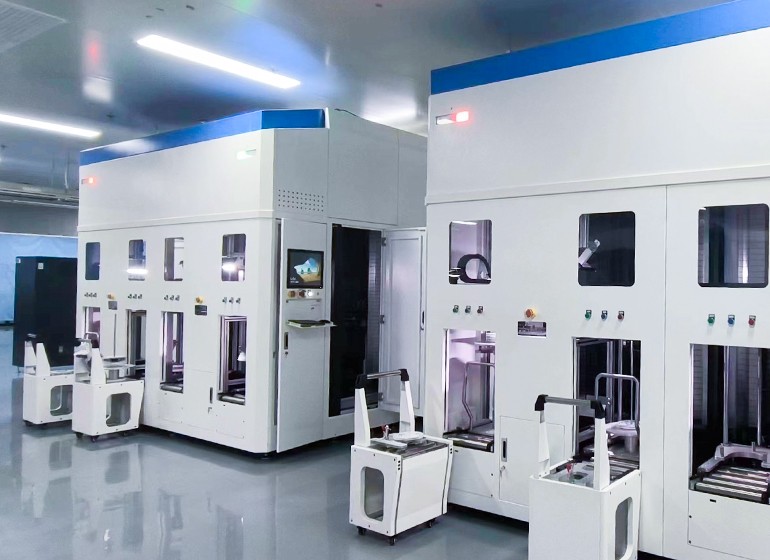
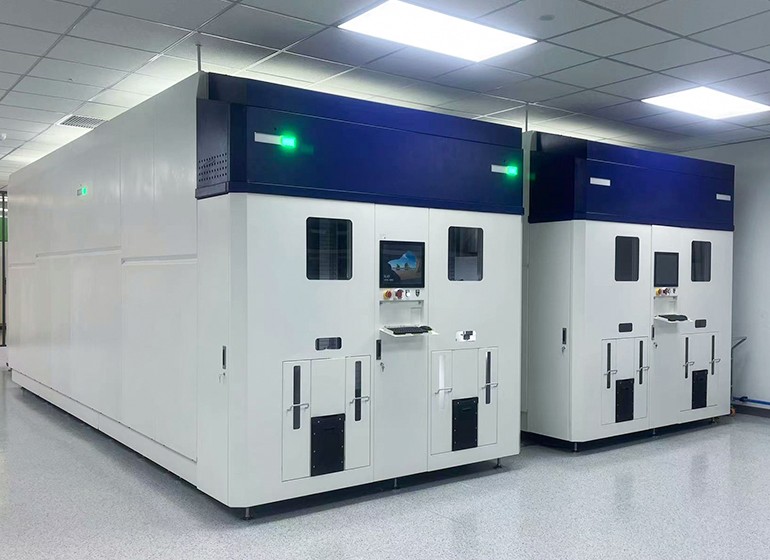
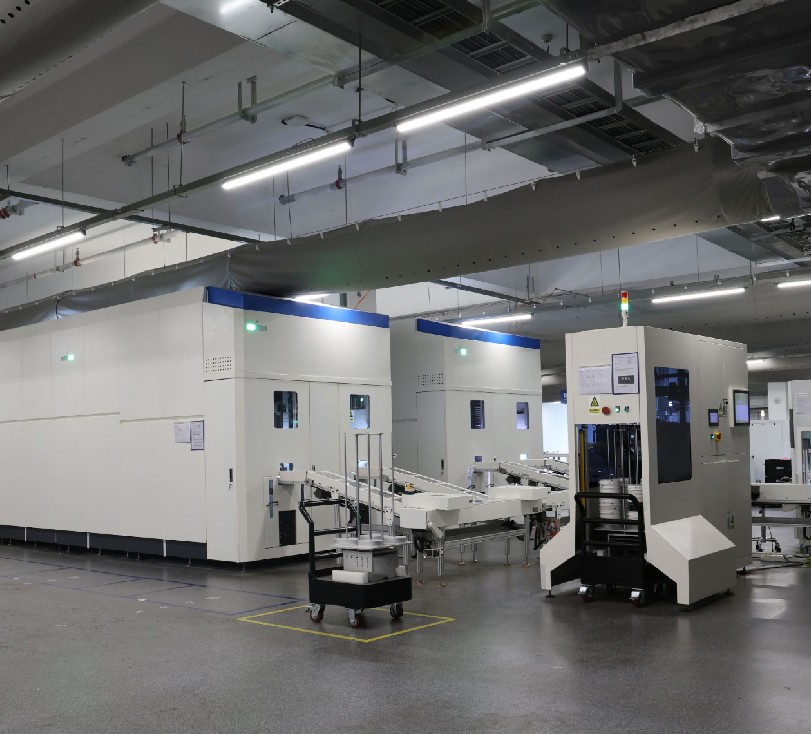
The hardware infrastructure of the Miniload System is designed to maximize space utilization, optimize material flow, and ensure seamless integration between storage and production processes, all while enhancing operational efficiency and flexibility.
(1) Multi-Tier Racking System
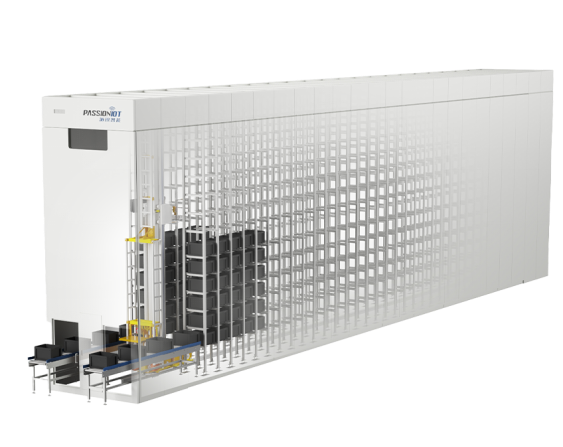
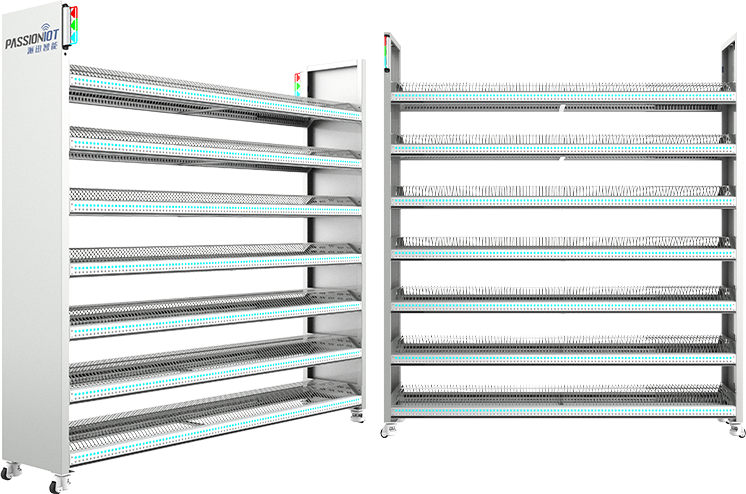
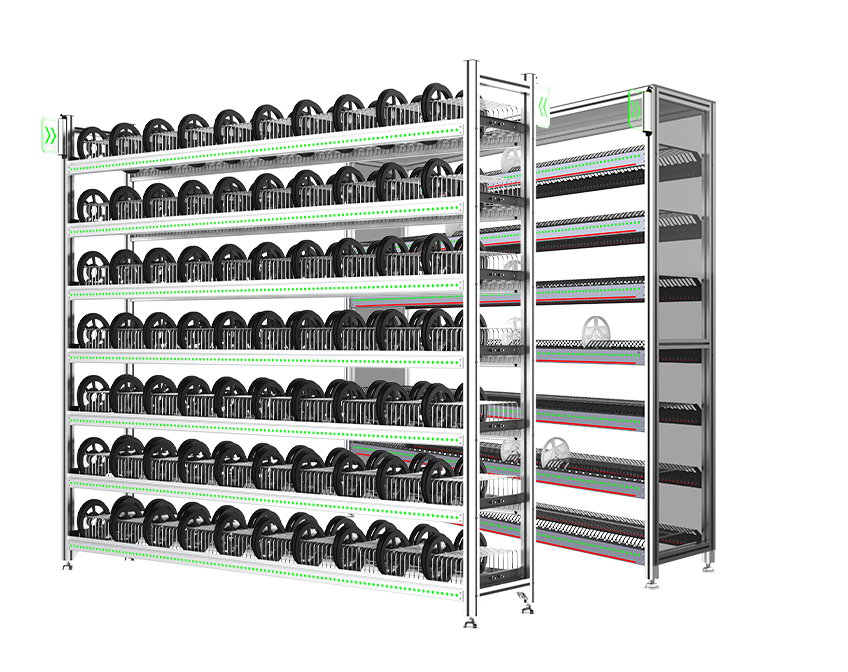
The Miniload System is built around a multi-tier racking structure that makes full use of vertical space. This high-density design enables space-efficient storage by allowing capacity to adjust as material volumes fluctuate, helping enterprises balance space usage between finished and semi-finished goods without fixed-area constraints.
(2) Automated Stacker Cranes
Automated stacking cranes also play an important role in storage and retrieval operations. They handle materials at high speed with consistent precision, enabling frequent access to goods while maintaining accuracy and stability. The system supports common load carriers such as totes, boxes, and containers, making it suitable for diverse material types and turnover patterns.
(3) Inbound/Outbound Conveyance Equipment
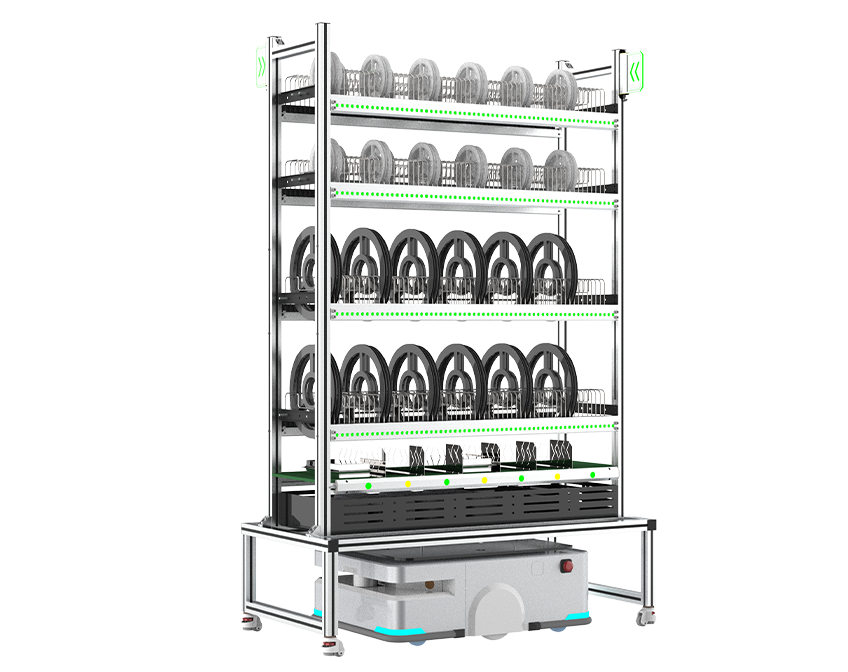
Inbound and outbound conveyance equipment connect storage with downstream and upstream processes. By supporting multi-station and multi-level layouts, the system separates finished goods outbound shipping from semi-finished goods feeding workflows. This physical separation reduces process interference and maintains orderly, predictable logistics flows.
Smart hardware isn't enough. Coordinated software control ensures every movement is precise, visible, and aligned with production needs.
2. Software Control
The software architecture of PassionIoT's Miniload System provides a unified, intelligent command center that seamlessly connects warehouse operations with production planning. It ensures every physical movement is data-driven, synchronized, and fully transparent across systems.
(1) WMS/WCS Systems
The Miniload smart storage solution operates on a coordinated WMS and WCS architecture. This two-layer structure allows higher-level warehouse management to define material attributes and status rules, enabling precise execution of movement and handling tasks.
(2) Centralized Control and Scheduling System
A centralized control and scheduling system in the smart storage solution provides unified oversight of both production and inventory activities. It continuously aligns real-time material data with actual production progress, ensuring that availability, location, and status are always clear and reliable. This level of coordination reduces uncertainty in material supply, improves kit completion rates, and enables more stable and predictable production planning.
(3) Integration with MES/ERP
By directly integrating with MES and ERP platforms, the Miniload smart storage solution eliminates the traditional disconnect between system data and physical inventory.
Information updates occur in parallel with material movement, eliminating data fragmentation and providing enterprises with a unified and accurate view of both production and warehousing operations.
Key Benefits of Miniload System
When hardware and software work together seamlessly, the result is not just efficiency—it's a measurable impact across your warehouse and production line.
1. Enhance Production Efficiency and Kit Completion Rate
Ever had a production line waiting on missing materials?
Our system stores finished and semi-finished goods together digitally. You always know what’s available, what’s next, and when you might run out. The flow is predictable, materials move on time, and kit completion improves at each stage.
2. Reduce Operational Costs and Storage Space Requirements
Running a warehouse isn't cheap. Space, manpower, overhead—it all adds up. That's why we designed high-density vertical storage with automated handling. It's compact, efficient, and it doesn't rely on excessive manual work. It also minimizes unused buffer areas, improving overall space utilization.
3. Achieve Inventory Visibility and Data-Driven Precision Decision-Making
Imagine opening your dashboard and instantly seeing exactly where every item sits, how much you've got, and what status it's in—no guesswork.
Real-time synchronization between shelves and the system provides clarity. You can plan better, solve problems faster, and make decisions with confidence.
4. Strengthen System and Business Flexibility and Resilience
Our integrated design keeps your operations flexible. You can scale up, reconfigure, or connect new workflows without a massive overhaul. This agility helps enterprises adapt quickly to changing production and order demands.
Conclusion
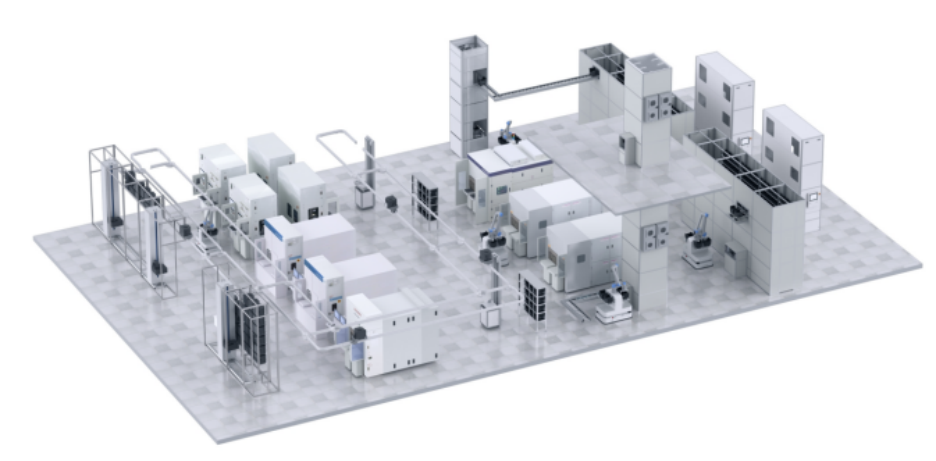
In short, PassionIOT's Miniload System redefines traditional warehouse management—resolving conflicts between finished and semi-finished goods, providing real-time visibility, and boosting operational efficiency.
Ready to optimize your production and warehouse performance? Discover how the Miniload System delivers these benefits for your operations—Contact PassionIOT for Smart Storage Solution.





 Home
Home